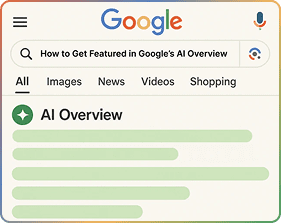
Generative engine optimization (GEO) is the practice of optimizing your content and brand presence so generative AI engines cite and quote you in their answers. The platforms this covers include ChatGPT, Perplexity, Gemini, Claude, Google AI Overviews, and Google AI Mode.
The term comes from a 2024 research paper by Aggarwal et al. from Princeton and IIT Delhi, published at KDD 2024, which tested which content changes raised visibility in AI-generated answers and which did not. The findings are the most specific evidence available on what actually works.
This article covers what GEO is, what the research found, how generative engines choose their sources, a six-step GEO strategy, and what it looks like in practice.
What is generative engine optimization (GEO)?
Generative engine optimization (GEO) is the practice of making your content more likely to be retrieved, cited, and quoted by generative AI systems when they construct answers for users. Where SEO targets a position in a ranked list of links, GEO targets being named inside the answer itself.
One important clarification: GEO in this context means getting cited in generative AI answers. It does not mean geographic or local SEO, despite sharing the abbreviation. Searchers typing “geo optimization” (98 impressions reaching the existing GEO article in Search Console) are often looking for one or the other. This article covers the generative AI discipline.
Where GEO comes from: what the research found
The term generative engine optimization was introduced in the research paper “GEO: Generative Engine Optimization” by Aggarwal and colleagues, published at KDD 2024. The research team included contributors affiliated with Princeton University and IIT Delhi. The study evaluated nine content optimization methods using GEO-bench, a benchmark containing 10,000 queries across multiple subject areas. One of its key visibility metrics was position-adjusted word count.
The findings are important because they provide early experimental evidence of how specific content changes can influence visibility in AI-generated answers. However, these results come from a controlled research environment and should not be treated as universal rules for every AI search platform.
What worked:
| Method | Approximate Relative Visibility Change in the Study | Metric |
|---|---|---|
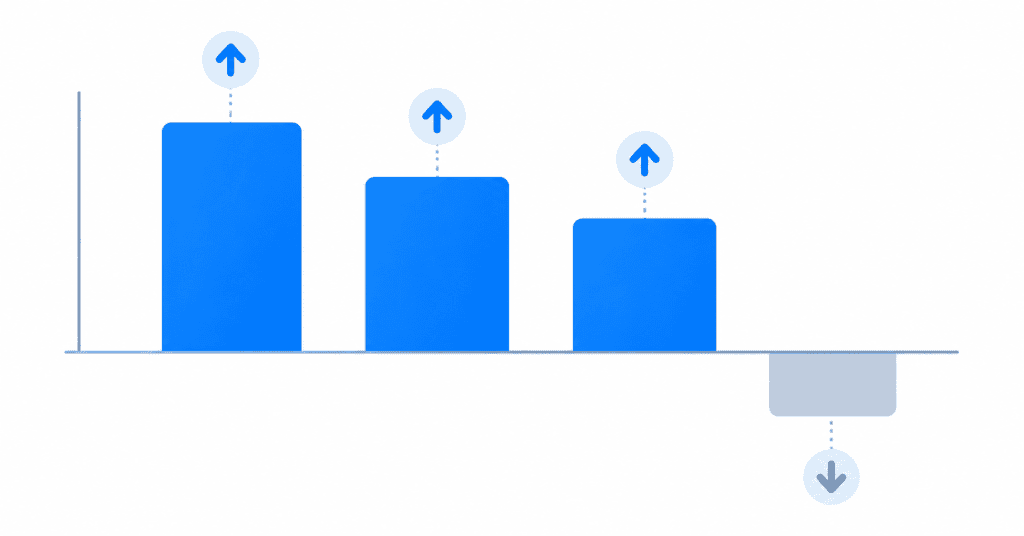
| Adding quotations | +41% | Position-adjusted word count (Table 1) |
| Adding statistics | +31% | Position-adjusted word count (Table 1) |
| Citing sources | +27% | Position-adjusted word count (Table 1) |
| Keyword stuffing | Negative | Performed worse than no change (Table 1) |
The researchers also found that some lower-ranked sources benefited substantially from content improvements. In one experiment, the source ranked fifth experienced a 115.1% relative visibility increase after source citations were added, while the top-ranked source experienced a 30.3% decrease. These findings suggest that content improvements may help less prominent sources compete for visibility within certain generative search systems. However, the results do not guarantee similar gains for smaller websites using today’s AI platforms.
On Perplexity specifically, quotations raised visibility by 22% and statistics by 37%, measured by impression score across 200 queries (Section 6, Table 5 of the paper).
Limits to state honestly. The paper’s main tests used a GPT-3.5 test engine, not the live production versions of ChatGPT or Perplexity that users interact with today. The Perplexity test used 200 queries rather than the full 10,000. The findings are the best available evidence, but they are from a controlled experiment, not a live ranking study.
How does generative engine optimization work?
Many generative AI search systems use retrieval-augmented generation (RAG) to supplement their responses with information from external sources. However, retrieval methods vary across platforms, and not every AI-generated answer involves a live web search.
Live retrieval vs. training data. Some AI search experiences retrieve information from web indexes or live sources to support their responses. However, language models also rely on patterns learned during training. Depending on the platform and query, an answer may combine retrieved information with model-generated explanations. Therefore, businesses should not assume that every AI answer is based entirely on newly retrieved pages.
Which sources do generative AI engines use? AI search platforms may use their own retrieval systems, third-party search providers, and platform-specific crawlers to discover relevant content. For example, OpenAI uses OAI-SearchBot to support ChatGPT search discovery, while Google’s AI Overviews and AI Mode rely on Google Search infrastructure. However, the exact source selection process differs across platforms and can change over time. A page’s absence from one search engine’s index does not necessarily make it invisible to every AI platform.
Query fan-out. One question is split into several sub-queries, each searched separately, and the answer synthesizes across the results. Source: Google’s guide to AI search. A page that answers the surface question but not the follow-up questions it triggers may be retrieved for one sub-query but not the others. For the full mechanics, see the AI search optimization guide.
GEO vs SEO vs AEO
| SEO | AEO | GEO | |
|---|---|---|---|
| Goal | Rank in search results | Become the direct answer to a question | Get cited and quoted in generative AI answers |
| Where you show up | Ranked results, map pack | Featured snippets, People Also Ask, AI Overviews, voice | ChatGPT, Perplexity, Gemini, Claude, AI Overviews, AI Mode |
| What you measure | Ranking, organic clicks | Snippet wins, PAA appearances, AI answer inclusion | Citation share, brand mention rate in AI answers |
| Built on SEO? | Is SEO | Yes | Yes |
GEO is built on SEO, not a replacement for it. A page that cannot be crawled, indexed, or shown as a snippet in search results is also unlikely to be retrieved by a generative AI engine.
AEO focuses on becoming the direct answer to a specific question. GEO focuses on being named and quoted across a broader generative answer. Both disciplines share the same technical requirements but have different content objectives. For the full four-way comparison, see the SEO vs GEO vs AEO vs AIO article.
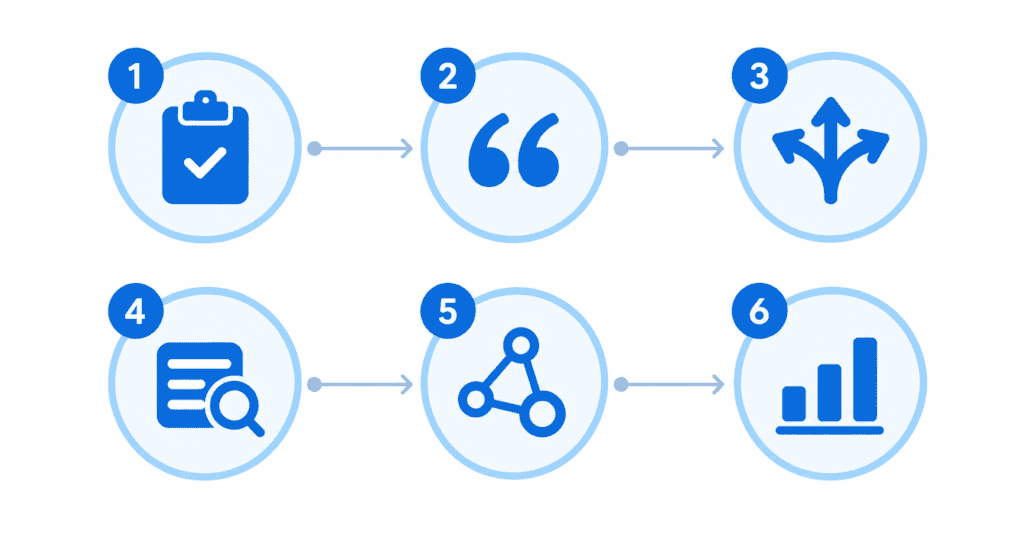
How to do generative engine optimization: a 6-step GEO strategy
1. Benchmark where you are cited today
Before optimizing anything, build a baseline. Choose 15 to 20 buyer prompts that represent the questions your customers ask when evaluating options in your category. Run each one in ChatGPT, Perplexity, Gemini, Claude, Copilot, and Google AI Mode. Record which brands are cited, which sources are linked, and whether your brand appears at all.
This is what the free AI Visibility Audit does: it gives you a documented baseline across platforms before any GEO work starts. Without a baseline, there is no way to know whether anything is changing.
Get your free AI Visibility Audit
2. Make pages quotable
The research paper’s top three methods were adding quotations, statistics and cited sources. These are the changes with the most evidence behind them.
In practice this means: include specific numbers with named sources in the sentence they appear. Add expert quotations where they support a claim. Cite the research or data behind every statistic. Write short, self-contained sentences that can be extracted and quoted without losing meaning.
Vague claims such as “AI search is growing” offer limited value without supporting evidence. Instead, include specific findings from credible research, explain the context behind the data, and link directly to the original source. This makes the information more useful and easier for readers to verify.
3. Cover the follow-up questions
Query fan-out means a single question generates multiple sub-queries, each searched separately. A page that answers the surface question but not its natural follow-ups may be retrieved for one sub-query but ignored by the others.
Cover related questions on the same page through additional H3 sections. Use internal links to related articles for follow-up topics that deserve more depth. Do not publish many thin pages targeting individual fan-out queries: Google’s own guide describes this as scaled content abuse, and it does not produce the depth that generative engines look for when choosing sources to cite.
For the full explanation of query fan-out, see the AI search optimization guide.
4. Be findable in the indexes engines use
Most SEO work targets Google’s index. But ChatGPT uses Bing’s index, and Claude uses Brave’s index. A page not verified in Bing Webmaster Tools or not crawlable by Bing may be invisible to ChatGPT regardless of its Google rankings.
Use Google Search Console and Bing Webmaster Tools to monitor indexing and crawling where relevant. In addition, review your robots.txt settings according to the specific AI search platforms you want to support. For ChatGPT search, OAI-SearchBot is the relevant OpenAI search crawler, while GPTBot serves a different purpose. Google’s AI Overviews and AI Mode rely on normal Google Search eligibility rather than Google-Extended access. Review each platform’s official documentation before changing crawler permissions.
5. Earn mentions where engines look
Generative AI search platforms may reference information from sources beyond a company’s website, including industry publications, review platforms, and relevant community discussions. However, source selection varies by platform and query. Focus on building a credible presence through accurate business information, useful contributions, and trustworthy third-party coverage.
For brand-level queries (a buyer asking which agency to use, which tool to buy, which firm to hire), AI engines draw partly from review platforms. G2, Clutch, and Trustpilot entries that describe your work in specific, verifiable terms are more likely to be cited than generic reviews.
Consistent brand facts matter as much as the mentions themselves. If your company description and credentials are described differently across different platforms, AI engines have less confidence about which version to retrieve.
6. Measure GEO
GEO measurement requires tracking three things consistently.
Citation share. The percentage of your target buyer prompts where your brand is cited, measured monthly using the same fixed prompt set.
AI referral traffic. Set up a custom channel group in GA4 with a regex covering: chatgpt.com, perplexity.ai, gemini.google.com, copilot.microsoft.com and claude.ai. This separates AI-referred sessions from organic and direct traffic.
Platform-specific reports. Google Search Console provides generative AI performance reporting that helps website owners monitor impressions in features such as AI Overviews and AI Mode, as well as generative AI experiences in Discover. Review these reports alongside traditional search performance data. Bing Webmaster Tools may provide additional visibility into Bing-powered AI experiences, depending on the reporting features available to your account.
GEO best practices checklist
| Action | Why it matters |
|---|---|
| Add statistics with named sources to every key claim | Statistics raised AI citation visibility by 31% in the GEO paper |
| Add quotations from named experts or research | Quotations raised visibility by 41% in the GEO paper |
| Cite every external source in the sentence it appears | Source citations raised visibility by 27% in the GEO paper |
| Write self-contained sentences that can be quoted without context | Makes content easier for AI engines to extract and attribute |
| Cover follow-up questions on the same page | Query fan-out means sub-questions are searched separately |
| Allow AI crawlers in robots.txt | Blocked crawlers cannot index or cite your pages |
| Verify in Bing Webmaster Tools | ChatGPT uses Bing’s index; Google rankings alone are not enough |
| Earn mentions on review platforms and industry publications | AI engines weight external sources alongside your own pages |
What doesn’t work
Keyword stuffing. The GEO paper found that keyword stuffing performed worse than making no changes at all (Table 1). Adding keywords without adding substance does not raise citation visibility and may reduce it.
llms.txt. This proposed file format aims to help language models access website information more easily. However, Google does not require it for AI Overviews or AI Mode, and there is no established evidence that adding it consistently improves AI citation performance. Prioritize accessible, high-quality content and technical SEO fundamentals before investing in experimental AI-specific files.
Special AI schema. Google does not require AI-specific structured data for pages to appear in AI Overviews or AI Mode. Instead, implement supported schema types when they accurately describe your content and meet Google’s eligibility requirements. Structured data can help Google understand page information, but it does not guarantee AI citations or enhanced search appearances.
Publishing many thin pages for fan-out queries. Google describes this approach as scaled content abuse in its own documentation. Generative engines look for depth and evidence when choosing sources. Thin pages targeting individual sub-queries do not provide either.
What GEO looks like in practice
Rafferty Weiss, a video production company, partnered with Rise Peak Digital in October 2025 to improve its visibility in traditional and AI-powered search. According to Rise Peak Digital’s published case study, the agency addressed technical SEO issues, improved content structure, and aligned key pages with relevant search intent. By the middle of the second month, the client had gained 51 new first-page keyword rankings and recorded 69 AI citations across Google AI Overviews, Gemini, Perplexity, and Copilot, according to the company’s reporting.
Is GEO worth it?
GEO suits B2B companies and growth-stage service firms most immediately. These are businesses where buyers research options in AI tools before talking to sales, where a named citation in a ChatGPT or Perplexity answer can influence a shortlist before a website is even visited.
The GEO paper’s rank finding is relevant here: the fifth-ranked source gained 115% citation visibility from citing sources, while the top-ranked source lost 30% from the same change. A site with lower domain authority than its competitors can win citations that higher-authority pages miss, if its content is more quotable and specific.
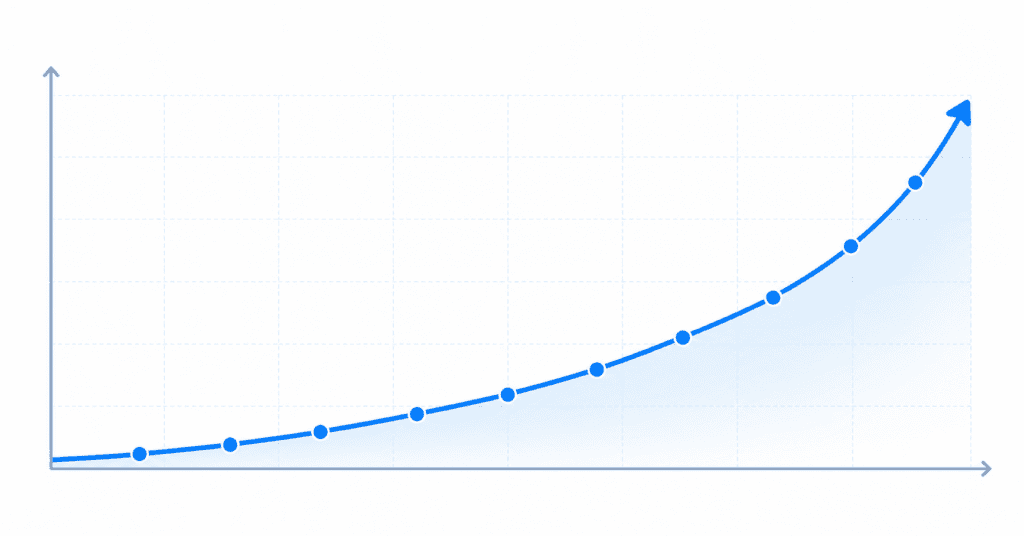
GEO performance should be evaluated over time rather than against a guaranteed sequence of results. A 60-day review can help identify early changes in search visibility and AI-generated responses. At 90 days, compare brand mentions, source citations, relevant referral traffic, and available search performance data against the original baseline. Results depend on the website, competitive environment, implementation quality, and platform behavior.
FAQ
What is GEO?
Generative engine optimization (GEO) is the practice of optimizing content and brand presence so generative AI engines cite and quote you in their answers. The term comes from a 2024 research paper by Aggarwal et al. from Princeton and IIT Delhi, which tested which content changes raised visibility in AI-generated answers across 10,000 test queries.
Is GEO better than SEO, or replacing it?
GEO builds on SEO rather than replacing it. A page that cannot be crawled, indexed or shown as a snippet in search results is also unlikely to be retrieved by a generative AI engine. GEO changes the content target (being cited rather than ranking) and adds off-site brand signal work, but the underlying technical requirements are shared. Neither is better in isolation. Both serve different parts of how buyers find information.
What is AEO vs GEO vs SEO?
SEO targets a ranked position in search results. AEO targets being selected as the direct answer to a question (featured snippets, People Also Ask, voice). GEO targets being named and quoted inside a generative AI answer (ChatGPT, Perplexity, Gemini, Claude). All three are built on the same technical foundation. For the full comparison, see the four-way article.
[Link to: risepeakdigital.com/seo-vs-geo-vs-aeo-vs-aio-whats-the-difference/]
Is GEO the same as AI SEO?
GEO is one part of what gets called AI SEO, but the terms are not identical. AI SEO broadly covers everything done to maintain visibility as AI systems reshape how people search, including AEO, GEO and the technical work of ensuring AI crawlers can access your pages. GEO specifically means the content and brand signal work that raises citation visibility in generative AI answers.
Does GEO work for small businesses?
Yes, and possibly more than for large ones in the short term. The GEO paper found that lower-ranked pages gained most from content improvements: a source ranked fifth gained 115% citation visibility from citing sources. A focused small business with specific, evidence-backed content can win citations that a larger competitor with more authority but thinner content misses.
Generative engine optimization is not a separate discipline from SEO. It is a sharper target within it: making content quotable, backing every claim with evidence, and building the off-site brand presence that gives AI engines the confidence to cite you.
Get a free AI Visibility Audit to see where your brand currently stands across ChatGPT, Perplexity, Gemini, and Google AI Overviews before starting GEO work.
Get your free AI Visibility Audit