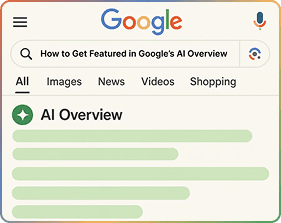
AI search optimization has become one of the most important aspects of digital visibility as search continues to evolve. At Rise Peak Digital, we’ve seen businesses maintain strong rankings while losing visibility because AI-powered search is changing how people discover information.
Search looks very different than it did 18 months ago. Google AI Overviews now appear above traditional search results for many queries, while platforms like ChatGPT and Perplexity answer questions that once sent users directly to Google. As more buyers rely on AI-generated answers, brands that previously owned the first page can lose clicks. This can happen even when their rankings remain strong.
This shift has changed how businesses earn visibility. Ranking well is still important, but it is no longer enough. Brands also need content that AI systems can understand, summarize, and reference when generating answers.
This is where AI search optimization comes in. It builds on traditional SEO by helping businesses improve their visibility across AI search platforms. It doesn’t replace the fundamentals of SEO, it strengthens them for AI-driven discovery. Through AI search optimization services, businesses can strengthen their authority across both traditional search and AI-generated results.
This guide explains what AI search optimization is, how it differs from traditional SEO, why AI Overviews have changed search behavior, and what marketers, agency owners, and business leaders should do to stay visible as search continues to evolve.
What Is AI Search Optimization?
AI search optimization is the practice of structuring content so it appears in AI-generated answers, Google AI Overviews, and responses from large language models such as ChatGPT and Perplexity, not just traditional search engine results. The goal is to make your content easy
for AI systems to understand, summarize, and reference. That increases the likelihood of your content appearing when users ask questions.
Traditional SEO focuses on helping webpages rank in search results. AI search optimization goes a step further by helping AI platforms understand your expertise and determine whether your content is worth citing in generated responses.
You’ll also encounter related terms that reflect different aspects of AI-powered search:
- Traditional SEO optimizes content for search engine crawlers and organic rankings.
- Answer Engine Optimization (AEO) focuses on creating content that directly answers user questions.
- Generative Engine Optimization (GEO) focuses on improving how content is understood and referenced by generative AI systems. (Link to the guide once it’s published.)
These approaches are complementary rather than competing strategies. AI search optimization builds on established SEO best practices while preparing content for AI-powered discovery across Google AI Overviews, ChatGPT, Perplexity, and other AI search experiences.
Why AI Overviews Changed the Game
Google AI Overviews changed how people discover information by placing AI-generated summaries above traditional organic search results for a growing share of informational queries. Instead of choosing from a list of links, users often receive an answer before they visit a website.
This shift has changed how businesses earn visibility in search because:
- AI Overviews appear above traditional organic listings for many informational searches.
- They cite multiple sources, which are not always the pages ranking first in Google’s organic results.
- Many websites have seen fewer clicks on queries where AI Overviews appear, even when their rankings remain stable.
The same shift extends beyond Google. Platforms such as ChatGPT and Perplexity generate responses by synthesizing information from multiple trusted sources. Instead of presenting a list of links, they provide direct answers to users’ questions. As a result, visibility increasingly depends on whether AI systems recognize your content as accurate, authoritative, and easy to summarize.
For marketers, agency owners, and business leaders, this helps explain why organic traffic can decline without a corresponding drop in rankings. AI search optimization builds on traditional SEO by helping content perform well in both organic search results and AI-generated search results.
How Is AI Search Optimization Different from Traditional SEO?
AI search optimization extends traditional SEO by preparing content for both search engines and AI-driven search. Traditional SEO helps webpages rank by improving keyword relevance, technical SEO, crawlability, backlinks, and page authority. AI search optimization builds on those foundations by making content easier for AI systems such as Google AI Overviews, ChatGPT, and Perplexity to understand, summarize, and reference.
That means optimizing beyond rankings. AI-powered search favors content that provides clear, direct answers to specific questions, uses structured formats such as definitions, lists, and Q&A sections, demonstrates expertise with authoritative sources, maintains consistent brand information across trusted websites, and gives large language models enough context to generate accurate summaries.
| Traditional SEO | AI Search Optimization |
| Optimizes for keyword relevance, crawlability, backlinks, and page authority | Builds on SEO with clear answers, structured content, entity clarity, and AI-readable formatting |
| Focuses on improving rankings in search engine results | Focuses on improving visibility in AI-generated answers and Google AI Overviews |
| Measures rankings, clicks, and organic traffic | Also considers AI citations, AI referral traffic, and brand visibility across AI platforms |
| Encourages users to visit webpages | Helps AI systems accurately interpret, summarize, and reference your content |
The most effective strategy combines both approaches. Traditional SEO establishes the technical and content foundation, while AI search optimization helps businesses strengthen visibility across both search engines and AI-powered search experiences. Learn how our services combine technical SEO, content strategy, and AI search optimization to support long-term search visibility.
What Does AI Search Optimization Actually Look Like in Practice?
From the experience of Rise Peak Digital, improving AI search visibility usually starts with strengthening existing content rather than replacing it. Many businesses already have valuable resources, but they often need better structure, clearer answers, and stronger topical coverage to improve how AI systems interpret and reference their content.
Content that is more likely to appear in Google AI Overviews and other AI-search platforms typically:
- Answers the primary question early in the page instead of burying it in long introductions.
- Uses descriptive headings, definitions, comparison tables, lists, and FAQs to organize information logically.
- Covers related questions within the same topic to demonstrate topical authority.
- Maintains consistent business information, service descriptions, and brand messaging across your website and trusted third-party sources.
Improving content structure is only part of the process. Businesses should also evaluate how AI platforms currently represent their brand. Search your company name, products, services, and target topics in ChatGPT, Perplexity, and Google Gemini to see whether your business is mentioned, how it is described, and which competitors or sources are referenced instead. This helps identify content gaps and opportunities to strengthen your brand’s visibility across AI-driven search.
Monitoring performance is equally important. In Google Analytics 4 (GA4), review referral traffic from AI platforms such as ChatGPT, Perplexity, and Claude, alongside changes in direct traffic that align with AI visibility. These signals can help identify how AI-powered search contributes to website traffic when evaluated alongside your broader analytics data.
Where to Start: Practical Steps for Brands and Agencies
For most businesses, improving AI search visibility starts with refining existing content rather than creating new pages. Begin with the content that already attracts qualified organic traffic, then strengthen it for both search engines and AI-powered search.
- Audit your AI visibility. Search your brand name, products, and services in ChatGPT, Perplexity, and Google Gemini. Review how your business is described, whether it appears in AI-generated responses, and which competitors are cited.
- Optimize your highest-performing content. Restructure high-traffic informational pages with direct answers, descriptive headings, comparison tables, lists, FAQs, and FAQ schema to make them easier for AI systems and users to understand.
- Strengthen brand authority. Maintain consistent business information, service descriptions, and author profiles across your website and authoritative third-party publications to reinforce trust and entity recognition.
- Monitor AI visibility. Track rankings, organic traffic, and conversions alongside AI referral traffic in Google Analytics 4 (GA4). Review referral traffic from platforms such as ChatGPT, Perplexity, and Claude to understand how AI-powered search contributes to website visits.
AI search is changing how businesses earn visibility, but it is not replacing traditional SEO. The strongest results come from combining technical SEO with clear, well-structured content that both people and AI systems can understand. Businesses that begin adapting now will be better positioned to build authority, maintain visibility, and compete as AI-powered search continues to evolve.
Want to know how your brand appears in AI search? Our AI search optimization services can help you evaluate your current visibility, identify opportunities for improvement, and build a strategy that supports both traditional search and AI-powered discovery.
Frequently Asked Questions About AI Search Optimization
What is AI search optimization?
AI search optimization is the practice of structuring content so it appears in AI-generated answers, Google AI Overviews, and responses from large language models (LLMs) such as ChatGPT and Perplexity. It builds on traditional SEO by optimizing for AI-powered search, not just organic search results.
How is AI search optimization different from SEO?
Traditional SEO focuses on helping search engines crawl, index, and rank webpages. AI search optimization builds on those foundations by structuring content so LLMs can accurately understand, summarize, and cite it in AI-generated answers.
Does AI search optimization replace SEO?
No. Traditional SEO remains the foundation for search visibility, while AI search optimization adds another layer by improving how AI systems interpret and reference your content. The most effective strategy combines both approaches.
How do I know if my brand appears in AI search results?
Search your brand name and key topics in ChatGPT, Perplexity, and Google Gemini to see whether your business appears in AI-generated responses. In Google Analytics 4 (GA4), monitor direct traffic and referral sources such as perplexity.ai, claude.ai, and chat.openai.com to identify visits from AI-powered platforms.
What is the difference between AI search optimization and GEO?
Generative Engine Optimization (GEO) is the academic and technical term for optimizing content for AI-generated answers from large language models and AI search platforms. AI search optimization is the broader, practitioner-focused term for improving visibility across Google AI Overviews, ChatGPT, Perplexity, and other AI-powered search experiences. For a deeper explanation, see our generative engine optimization guide once it is published.