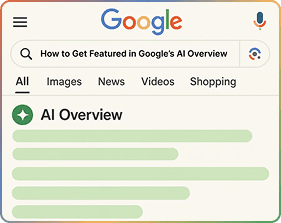

Mastering Search Visibility in the Era of AI Answer Engines
Quick Summary / Key Takeaways
- GEO focuses on positioning your content so AI systems can cite and reference it, not just rank it in traditional blue-link search results.
- Citations and brand mentions inside AI-generated answers increasingly influence how buyers discover trusted sources during early research.
- Structured data, clear entity relationships, and technical SEO architecture help large language models interpret your content accurately.
- AI systems tend to prioritize clear explanations, original insights, and well-supported information over generic summaries.
- Transitioning to GEO requires shifting content toward direct, well-structured answers that AI systems can interpret and summarize without ambiguity.
Introduction
Search is changing quickly. For years, visibility depended on keyword density and backlink profiles to compete in traditional Google results. Today, many people ask ChatGPT or Gemini for answers instead of browsing through a list of blue links. This shift introduces a different challenge. It is no longer enough to simply appear in search results. Your content must be clear and credible enough for AI systems to reference when generating answers. Generative engine optimization (GEO) focuses on structuring information so it can be interpreted, summarized, and cited by AI-driven search systems.
When you focus on GEO, you are building a foundation that works for both human readers and machine interpretation. It requires a deeper look at how information is organized, how expertise is demonstrated, and how clearly a topic is explained. AI systems prioritize sources that present structured explanations, clear entity relationships, and verifiable authority. If you want to remain visible as search behavior evolves, your content must communicate ideas in a way that AI systems can confidently understand and reference.
This guide explains what generative engine optimization is and how you can apply it within a modern search strategy. As discovery increasingly begins inside AI-generated answers, businesses need content that supports both traditional SEO and AI-driven visibility. At Rise Peak Digital, we focus on building search visibility systems that help brands structure their expertise for AI-generated answers while maintaining strong organic search performance.
SEO vs. Generative Engine Optimization: How Search Visibility Is Changing
| Feature | Traditional SEO | Generative Engine Optimization (GEO) | Strategic Objective |
|---|---|---|---|
| Primary Visibility Surface | Top 10 organic search results | AI-generated answers and source citations | Discoverability during research |
| Content Structure | Keyword targeting and metadata | Entity clarity and structured explanations | Interpretability |
| User Interaction | Click-through from search listings | AI-synthesized responses with cited sources | Faster decision support |
| Core Authority Signal | Backlinks and rankings | Citations, mentions, and topical authority | Trust and credibility |
| Success Indicator | Organic traffic and rankings | Frequency of citation in AI-generated answers | Brand visibility in AI research |
Key Metrics for Measuring GEO Performance
| Metric | What It Measures | Why It Matters | How It Is Evaluated |
|---|---|---|---|
| Citation Share | Percentage of AI-generated responses referencing your content | Indicates authority and discoverability in AI answers | Prompt testing and AI response analysis |
| Entity Clarity | How clearly AI systems identify your brand, topics, and expertise | Improves the likelihood of being cited or summarized | Structured content and entity mapping |
| AI Visibility | Frequency of brand mentions across AI-generated answers | Signals presence during early-stage research | Query monitoring and AI response tracking |
| AI Referral Traffic | Visitors arriving from AI platforms or AI-assisted search | Shows whether AI visibility converts into research traffic | Analytics tracking (GA4 or similar tools) |
GEO Implementation Preparation Checklist
- Audit existing high-performing content to identify pages that can deliver clear, authoritative answers to common industry questions.
- Implement Schema.org structured data to help AI systems interpret entities, relationships, and topical context.
- Rewrite key introductory sections to provide direct definitions and structured explanations that AI systems can summarize accurately.
- Ensure all important content and documentation are crawlable, indexable, and technically accessible to search engines and AI data pipelines.
GEO Visibility Optimization Checklist
- Monitor where your brand or content appears in AI-generated responses related to your core topics.
- Update statistics, research, and factual claims regularly so AI systems reference current and credible information.
- Track referral traffic from AI-assisted search experiences to identify which topics generate research-driven visits.
- Strengthen internal linking between related entities and topics to reinforce topical authority and improve content interpretation.
Table of Contents
Section 1: UNDERSTANDING GENERATIVE ENGINE OPTIMIZATION
Section 2: BUILDING A GEO STRATEGY FOR AI VISIBILITY
Section 3: MEASURING GEO PERFORMANCE AND SEARCH VISIBILITY
Frequently Asked Questions
Section 1: UNDERSTANDING GENERATIVE ENGINE OPTIMIZATION
FAQ 1: What is generative engine optimization?
Generative engine optimization (GEO) is the practice of structuring content so AI answer engines can interpret, summarize, and cite it when responding to user questions. Instead of relying only on keyword rankings, GEO prioritizes structured explanations, strong entity clarity, and authoritative answers that large language models can confidently reference. As search behavior shifts toward conversational queries, AI systems increasingly surface sources that present information in clear logical steps and demonstrate credible expertise.
In practice, GEO combines technical SEO architecture, structured content formatting, and entity-driven optimization so AI systems can accurately understand the context and authority behind your information. This approach strengthens visibility not only in traditional organic results but also inside AI-generated answers, where many early-stage research and evaluation processes now begin. When content is structured correctly, it becomes easier for AI systems to summarize, reference, and surface it during high-intent informational queries.

FAQ 2: How does GEO differ from traditional SEO?
Traditional SEO focuses on improving rankings in search engine results through signals such as backlinks, keyword targeting, and technical optimization. GEO operates at a different layer of visibility. Instead of competing only for blue-link positions, the goal is to ensure content can be cited and summarized inside AI-generated answers. AI systems prioritize sources that present clear reasoning, structured explanations, and credible expertise that can support synthesized responses.
This shift changes how content is built and evaluated. GEO emphasizes entity clarity, logical structure, and authoritative explanations so AI systems can interpret and reference information accurately. The approach combines technical SEO architecture, structured content systems, and authority signals to improve AI search visibility. The objective moves beyond rankings toward being included in AI-generated answers where early-stage research increasingly happens, which supports stronger qualified lead generation and more efficient pipeline growth.
Section 2: BUILDING A GEO STRATEGY FOR AI VISIBILITY
FAQ 3: Why are citations important in generative engine optimization geo?
Citations determine whether your content becomes part of the answer users see in AI-driven search. When AI systems generate a response, they typically reference sources used to construct that answer. If your content is cited, your brand becomes visible at the exact moment users are researching a problem or evaluating solutions. In GEO, this citation acts as a credibility signal because AI systems favor sources that present clear explanations, structured information, and defensible expertise.
At Rise Peak Digital, improving citation eligibility is addressed through AI Optimization (AIO) frameworks that prioritize structured content, strong entity clarity, and authoritative explanations. The objective is to position a client’s content as a reliable reference point that AI systems can confidently summarize and cite. When this happens consistently, visibility shifts from simple rankings to presence inside AI-generated answers, which often leads to higher-quality referral traffic and stronger early-stage pipeline development.
FAQ 4: Which AI platforms does GEO target?
GEO targets AI-driven answer engines that generate synthesized responses rather than returning only traditional search listings. Platforms such as ChatGPT, Google Gemini, Claude, and Perplexity interpret information from multiple sources and present a summarized answer to the user. To be referenced by these systems, content must present clear reasoning, structured information, and verifiable expertise that can be interpreted without ambiguity. If explanations are vague or poorly structured, AI models typically select alternative sources that are easier to summarize and cite.
Because each model processes information differently, GEO strategies focus on building structured authority rather than optimizing for a single platform. This involves combining technical SEO foundations, entity clarity, and logically structured explanations so AI systems can understand the relationships between topics, entities, and supporting evidence. When content is built this way, it becomes easier for multiple AI platforms to reference it as a trusted source during research-driven queries.
FAQ 5: How do I optimize content for AI overviews?
To optimize for AI Overviews, you need to present clear, direct answers early in your content. Start by addressing the question immediately, then support it with structured headings, concise explanations, and lists that make key points easy for AI systems to extract. When your content is logically organized and written with clear entity relationships, AI systems can interpret the information more accurately and summarize it without losing context.
You should also include original insights, data points, or practical expertise that cannot be easily replicated across generic content. AI systems prioritize sources that provide specific, verifiable information rather than repeating widely available summaries. Within an AI Optimization (AIO) approach, structuring your content around clear reasoning, authoritative explanations, and well-defined topics improves the chances that your page becomes a reliable reference inside AI-generated responses.
Section 3: MEASURING GEO PERFORMANCE AND SEARCH VISIBILITY
FAQ 6: What role does structured data play in GEO?
Structured data provides the technical roadmap that helps AI systems identify the entities and relationships within your content. By implementing Schema markup, you clarify what your page represents, how key topics connect, and how information relates to other entities across the web. This reduces interpretation errors and helps AI systems process your content with greater confidence. In GEO, this level of technical clarity matters because AI-generated answers rely on sources that are easy to interpret both semantically and structurally.
Within an AI Optimization (AIO) strategy, structured data works alongside technical SEO architecture and structured content frameworks to strengthen how information is interpreted and surfaced. When entities, topics, and relationships are clearly defined through Schema markup, AI systems can better understand the authority and context behind your content. This improves the chances of being referenced as a source while strengthening overall search visibility across both AI-driven and traditional discovery channels.

FAQ 7: How can I track my performance in AI search?
Tracking performance in AI search requires looking beyond traditional keyword rankings. You should monitor referral traffic from AI-driven domains, identify where your content is cited in generated responses, and review how often your brand appears in AI-assisted research queries. Many teams also test prompts across AI interfaces to evaluate whether their content is referenced when users ask topic-related questions. Another useful metric is share of model, which measures how frequently your brand is cited compared with competitors when AI systems generate answers around the same topic.
Within a structured search visibility strategy, this analysis typically combines technical SEO data, content performance signals, and citation tracking to understand how AI systems interpret your content. Monitoring these indicators helps you identify which pages are becoming trusted references and which ones require stronger entity clarity or deeper explanations. When tracked consistently, these signals provide practical insight into how well your content is positioned inside AI-generated answers and whether it is contributing to qualified research traffic.
FAQ 8: Will GEO replace traditional search engine optimization?
GEO does not replace traditional SEO. It expands how search visibility works as more buyers begin their research inside AI-generated answers. Traditional SEO still supports core signals such as indexing, site architecture, and organic rankings. However, modern discovery often starts with synthesized responses where AI systems summarize information before users visit a website. If your brand is not present in those answers, it may never enter the early-stage evaluation process.
At Rise Peak Digital, we treat GEO as a strategic extension of search rather than a separate tactic. Our approach combines technical SEO foundations with structured content systems designed for AI-driven discovery. We focus on building search visibility systems that position brands inside AI-generated answers while maintaining strong organic performance. When both layers work together, businesses capture earlier research intent, improve qualified lead flow, and reduce long-term dependence on paid acquisition.