Entity SEO represents one of the biggest shifts in modern search. For most of SEO’s history, the core question was simple: does this page contain the right keywords? If it did, and if enough other pages linked to it, it had a reasonable chance of ranking.
That model no longer reflects how search actually works. Google is not trying to match words anymore. It is trying to understand meaning. And more specifically, it is trying to understand entities.
An entity is any clearly identifiable thing: a person, a brand, a product, a place, a concept, or an event. Unlike keywords, which are just strings of text, entities have identities. They have consistent meanings that do not change based on how they are phrased. And increasingly, the brands that show up consistently across search results, AI-generated answers, knowledge panels, and industry conversations are the ones that search engines have learned to recognize and trust as entities.
This guide explains what entity SEO is, how it works, and what you can do to build the kind of brand recognition that search engines and AI platforms respond to.
What Is Entity SEO?
Entity SEO is the practice of optimizing your brand, content, and digital presence so that search engines can clearly identify, categorize, and connect you to the topics you want to be associated with. It moves away from targeting individual keywords and toward clearly communicating what your brand is, what it does, and how it relates to other things search engines already understand.
The concept became central to modern SEO with the introduction of Google’s Knowledge Graph in 2012. Google’s documentation explains how the Knowledge Graph helps search understand entities and the relationships between them.
Rather than just indexing webpages, Google began building a vast database of entities and the relationships between them. A business was no longer just a website containing certain keywords. It became an entity with attributes: a name, a category, a location, a set of services, relationships with other known entities, and a trust level built from consistent signals across the web.
That shift transformed what it means to rank. Today, Google is not asking “does this page contain this keyword?” It is asking “is this brand genuinely associated with this topic, and do we have enough evidence to trust it?”
How Entity SEO Differs from Traditional Keyword SEO
Traditional keyword SEO and entity SEO are not opposites. Keywords are still essential and work best as part of a broader Search Optimization strategy that helps search engines understand both your content and your brand. They tell search engines what your content is about and help match your pages to specific user queries. The difference is in what they accomplish on their own.
A keyword is a text string. It exists on a page, and search engines use it as a signal of topic relevance. But two pages targeting the exact same keyword can produce very different results depending on the entity context behind them. A page published by a recognized brand with a clear topic authority profile, consistent external mentions, and structured data that confirms its identity will outperform an otherwise identical page from an unknown source, because search engines trust the entity behind it.
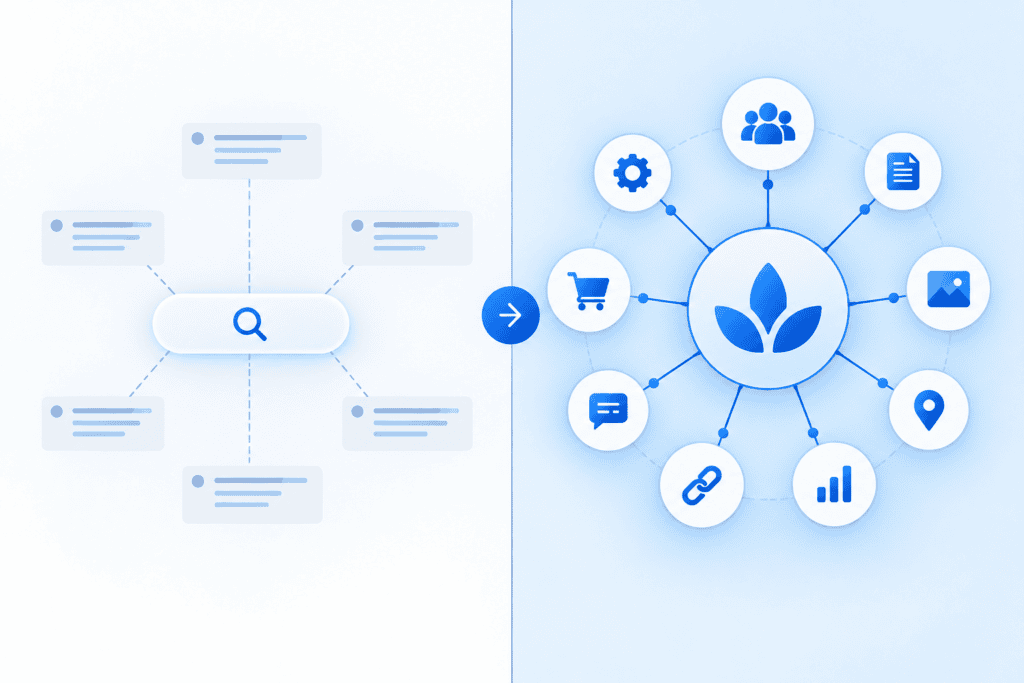
Entity SEO is how you build that trust at the brand level rather than the page level. Instead of treating each piece of content as an isolated keyword target, entity-based SEO connects your content, your brand presence, and your external signals into a coherent identity that search engines can understand, categorize, and rely on.
Why Entity Recognition Matters More Than Ever for AI Search
Entity SEO has always mattered for traditional search visibility. But its importance has grown significantly as AI-powered search platforms have become more central to how people find information.
Google AI Overviews, ChatGPT, Perplexity, and Gemini do not retrieve results the way traditional search does. They build responses by drawing on their understanding of entities and the relationships between them. When a user asks a question, AI systems look for sources they recognize as authoritative entities on the relevant topic. Brands that are clearly defined, consistently represented, and associated with specific areas of expertise are far more likely to be cited.
This is not a theoretical advantage. Our work with Axim Mica demonstrates it directly. Axim Mica had deep technical expertise in their field, but their content lacked the structure and clarity needed for AI and search systems to interpret it effectively. Through entity-focused content restructuring, internal linking improvements, and intent-aligned technical content optimization, the site drove 197 AI citations and reached the number one ranking for core industry queries. The brand went from being technically knowledgeable to being recognized as a trusted entity by AI search platforms.
The mechanism behind this result is consistent: when AI systems have clear, consistent, and well-structured signals about what a brand is and what topics it covers, they are more likely to reference it. Entity clarity is not just an SEO tactic. It is a prerequisite for AI search visibility.
How Google’s Knowledge Graph Evaluates Brand Entities
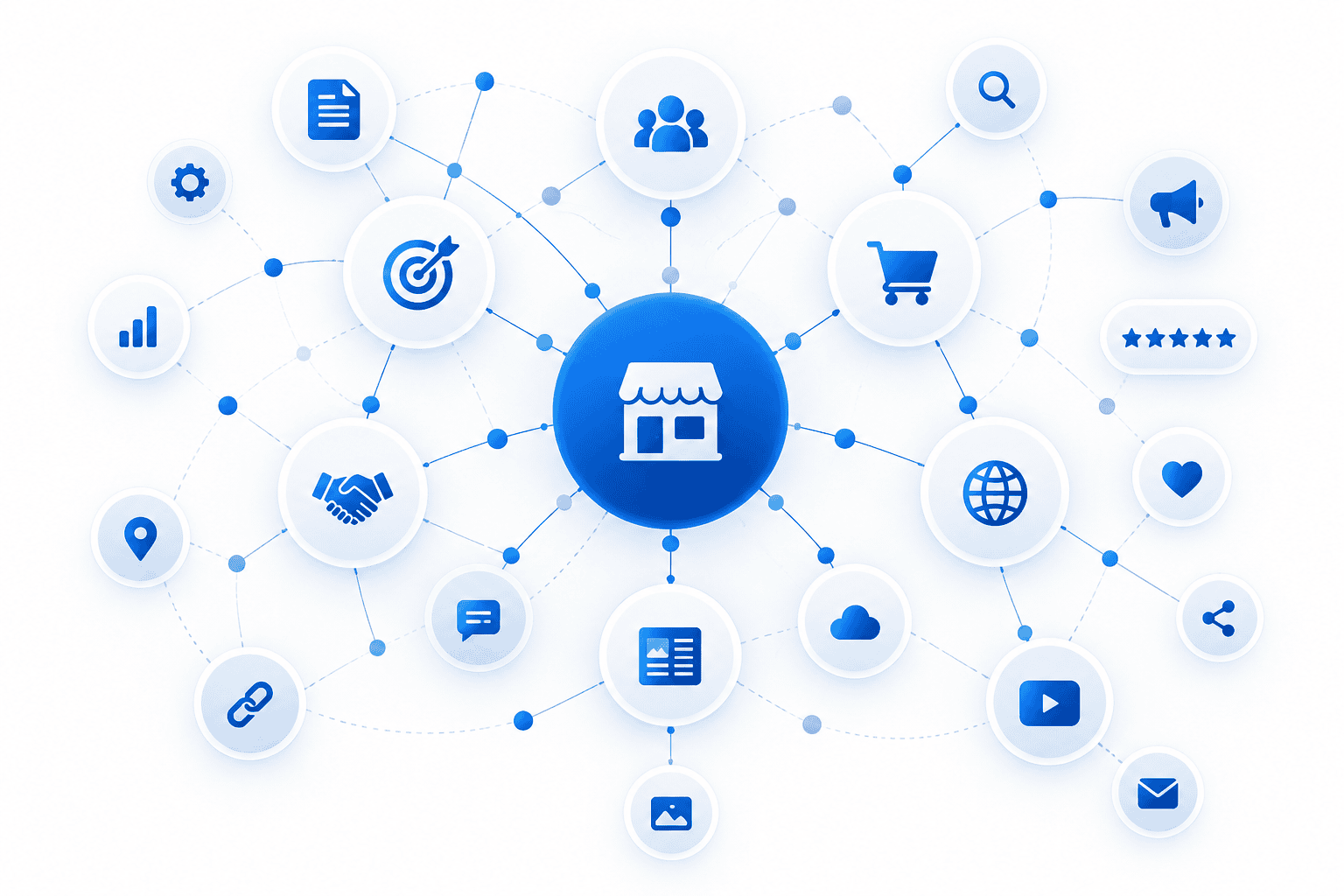
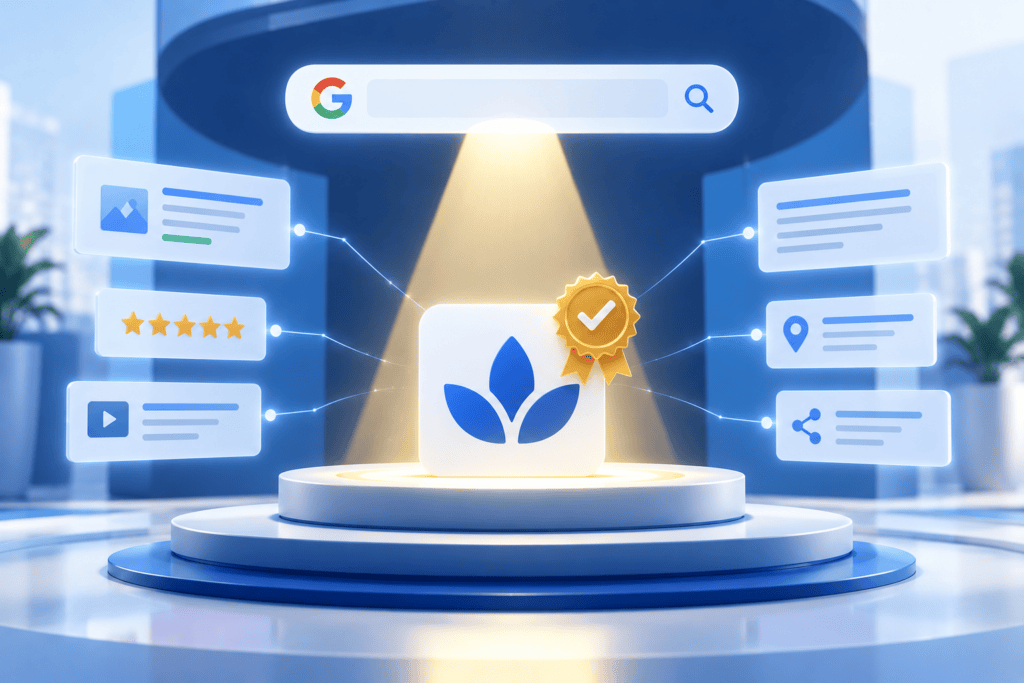
Google does not build its understanding of a brand from your website alone. It collects signals from multiple sources across the web and uses them to construct an entity profile. The more consistent and interconnected those signals are, the more confidently Google can categorize your brand and the more likely it is to surface you for relevant queries.
Key Signals That Build Entity Authority
- Your website content and structure. Clear descriptions of who you are, what you do, and who you serve help Google understand the entity behind the domain. Consistent terminology, organized topic coverage, and internal linking patterns all contribute to how Google interprets your brand.
- Structured data and schema markup. Schema markup translates your brand information into machine-readable language that Google can process directly. Organization schema, LocalBusiness schema, and Article schema each provide explicit entity definitions that reduce ambiguity about what your brand is and how it should be categorized.
- Third-party mentions and citations. Google builds entity confidence by looking for consistent information about your brand across trusted external sources. Industry publications, directories, partner websites, news coverage, and social platforms all contribute. If your brand name, description, and category appear consistently across these sources, Google’s confidence in the entity increases.
- Wikipedia and Wikidata. Google’s Knowledge Graph draws heavily from both. Being referenced in Wikipedia or having a Wikidata entry provides a direct connection to Google’s established entity database. For most brands, this requires building enough external recognition to merit inclusion, but even linking to relevant Wikipedia articles and mirroring their entity descriptors in your own content can strengthen your semantic positioning.
- Google Business Profile. For businesses with a physical or service-area presence, a complete and consistent GBP is the most direct anchor point connecting your brand to Google’s entity ecosystem. It ties your name, address, category, and services into one verified profile that Google can use to build and validate your entity.
Practical Steps to Build Entity Authority for Your Brand
Building entity authority is not a single tactic. It is a sustained effort to make your brand clearly identifiable and consistently represented across every digital touchpoint search engines and AI systems evaluate.
Define your brand entity clearly. Start with your own website. Your homepage, about page, and service pages should clearly and consistently describe who you are, what you do, the audience you serve, and the topics you have expertise in. Vague or inconsistent descriptions create ambiguity that weakens entity recognition.
Implement schema markup. Organization schema establishes your brand as a recognized entity with defined attributes. The sameAs property in JSON-LD is particularly powerful because it explicitly connects your website to your profiles on LinkedIn, Wikipedia, Wikidata, and other authoritative sources, telling search engines that these are all representations of the same entity.
Build topical authority through content clusters. A strategic Content Marketing approach helps your brand consistently publish authoritative content across a defined topic area, strengthening entity recognition over time. A pillar page supported by a cluster of interlinked subtopic pages communicates to search engines that your brand has genuine depth on a subject, not just isolated keyword coverage.
Earn external citations and brand mentions. Every time your brand is mentioned on a trusted external site, it adds to the network of signals search engines use to build your entity profile. Prioritize placements in industry publications, expert roundups, partner sites, and authoritative directories relevant to your category.
Maintain consistency across all platforms. Inconsistent brand information across platforms creates confusion for search engines trying to build a unified entity profile. Your brand name, description, service categories, and contact information should match across your website, GBP, social profiles, and directory listings.
Structured Data and Schema Markup for Entity SEO
Structured data is one of the most direct tools available for entity SEO because it translates your brand information into explicit, machine-readable definitions that search engines can process without interpretation.
The most useful schema types for entity building include:
Organization schema which defines your brand as a recognized entity with a name, URL, logo, contact information, social profiles, and a sameAs link to authoritative external references.
LocalBusiness schema for service-area businesses that want to establish entity presence in local search and map-based queries.
Article schema for published content that associates authorship, publication date, and topic with your brand entity, helping AI systems understand not just what the content says but who produced it.
FAQ schema which formats question and answer pairs in a way that AI systems can extract directly for use in AI Overviews and conversational search responses.
The sameAs property deserves particular attention. By explicitly linking your schema to your Wikipedia URL, Wikidata identifier, and official profiles on established platforms, you are telling search engines in machine-readable language that these sources all refer to the same entity. This dramatically reduces disambiguation risk, particularly for brand names that could be confused with other entities.
After implementing your schema markup, validate it using Google Rich Results Test and the Schema Markup Validator. These tools help identify errors, confirm your structured data is correctly formatted, and ensure search engines can accurately interpret your entity information.
How to Measure Entity SEO Progress
Entity authority builds gradually, and the results are not always immediately visible in traditional ranking reports. Monitoring the right signals helps you understand whether your entity-building efforts are working and where to focus next.
Knowledge Graph visibility. Use Google’s Knowledge Graph Search API to check whether your brand has a Knowledge Graph entry, what attributes it includes, and how it is described. An expanding Knowledge Graph presence over time is a strong indicator of improving entity recognition.
Branded search volume. As your entity authority grows, more people will search for your brand name directly. Rising branded search volume in Google Search Console is one of the clearest signals that your brand is becoming a recognized entity rather than an anonymous website.
AI citation monitoring. Manually test your brand and core topic keywords across ChatGPT, Perplexity, Gemini, and Google AI Overviews. You can also use Google’s Natural Language API to evaluate how Google’s AI interprets your brand entities, topics, and relationships over time. Track whether your brand is being cited, how it is described, and whether that description aligns with how you want to be positioned.
Featured snippet and knowledge panel appearances. These SERP features draw on similar signals to AI citations. Increasing appearances in featured snippets and knowledge panels indicates that search engines are treating your content as an authoritative source on the topics you cover.
Impression growth on topic-adjacent queries. As entity authority develops, your pages will often begin earning impressions for semantically related queries you have not directly targeted. This expansion of topical visibility in Search Console is a reliable indicator of growing entity recognition.
Want to learn more about Entity SEO, semantic search, and AI-powered search strategies? Visit our Blog to explore expert insights, practical guides, and the latest SEO best practices for building long-term search visibility.
Frequently Asked Questions About Entity SEO
Does entity SEO replace keyword SEO?
No. Keywords remain an essential part of how search engines understand what your content is about and match it to user queries. Entity SEO builds on top of keyword strategy rather than replacing it. Think of keywords as the signals that describe your content and entities as the identity that gives those signals authority and context.
How long does it take to build entity authority?
Initial improvements from schema implementation and structured entity signals can show results within weeks. Significant Knowledge Graph recognition and consistent AI citation visibility typically take six to twelve months of sustained effort. Entity authority compounds over time, which means brands that invest early build a durable competitive advantage.
Does structured data guarantee Knowledge Graph inclusion?
No. Structured data improves the clarity of your entity signals significantly, but inclusion in the Knowledge Graph ultimately depends on Google having enough trusted external evidence about your brand. Schema markup is the most direct signal you can control, but external citations and brand recognition across trusted platforms are equally important.
What is the difference between entity SEO and semantic SEO?
Semantic SEO is the broader practice of optimizing content for meaning and context rather than keyword matching. Entity SEO is a specific subset that focuses on how search engines identify and classify concepts, brands, people, and other real-world things. Entity SEO is essentially the brand-level application of semantic principles.
Can small or newer brands benefit from entity SEO?
Yes. Entity SEO is not exclusively a strategy for established brands. Newer businesses that clearly define their entity, implement structured data early, and build consistent external signals from the beginning can develop entity recognition faster than competitors who have been online longer but have fragmented or inconsistent brand signals.