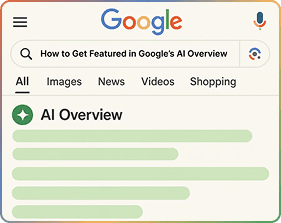

Mastering the Strategic Shift from Search Links to AI Citations
Quick Summary / Key Takeaways
- Answer engine optimization focuses on being cited in AI-generated answers, not just ranking in traditional search results. Visibility increasingly depends on whether AI systems reference your content when responding to user questions.
- Structured data and clear entity relationships help AI systems interpret your content accurately, improving the likelihood that it can be extracted and cited in generated responses.
- Topical authority is built through consistent, in-depth coverage of a subject, demonstrating expertise that answer engines can trust when selecting sources.
- Technical clarity matters for AI visibility. Content that is well-structured, crawlable, and logically organized is easier for AI systems to interpret and summarize.
- Content that mirrors natural user questions performs better in AI-driven search environments, especially when it provides clear answers and supporting context rather than relying on keyword-heavy writing
Introduction

Search behavior is shifting. Instead of scanning pages of blue links, many users now ask questions through AI systems and expect a direct, synthesized answer. This change is reshaping how visibility is earned online. Answer engine optimization focuses on structuring content so AI systems can interpret, summarize, and reference it when responding to user questions. If your information is not presented in a way these systems can clearly understand, it is unlikely to appear in the answers modern buyers consult during early-stage research.
This shift changes how digital strategies are built. Traditional SEO focused heavily on keywords, backlinks, and ranking positions. AEO emphasizes clarity, structured information, and topical expertise that AI systems can confidently cite. When content explains a topic directly, supports it with credible context, and organizes information in a logical format, it becomes easier for answer engines to extract and present it as part of a generated response.
In this guide, we explain how answer engine optimization works and how organizations can structure content to win AI-generated answers. The sections ahead outline the technical, content, and authority signals that influence whether your information is surfaced by answer engines. Companies preparing for the rise of answer engines often work with specialists such as Rise Peak Digital, whose focus is building search visibility systems that position brands inside AI-generated answers where modern buyers begin their research.
Traditional SEO VS. Answer Engine Optimization (AEO)
| Optimization Element | Traditional SEO Focus | AEO Strategy Focus | Strategic Outcome |
|---|---|---|---|
| Primary Target | Search engine ranking systems | AI systems and answer engines that generate responses | Visibility inside AI-generated answers |
| Content Structure | Long-form informational articles | Direct answers, structured explanations, and Q&A blocks | Faster information extraction |
| Primary Success Signal | Keyword rankings and organic traffic | Citation within AI-generated responses | Brand authority and AI visibility |
| User Intent | Browsing and research across multiple pages | Immediate problem-solving through summarized answers | Faster decision-making |
Key Metrics For Measuring AEO Performance
| Metric Category | Performance Indicator | Measurement Method | Strategic Impact |
|---|---|---|---|
| AI Visibility | Presence in AI-generated answers | Query testing and AI citation monitoring | Market Presence |
| Brand Authority | Frequency of brand mentions or citations | Brand monitoring and AI response analysis | Trust and credibility |
| Engagement | Traffic from AI-assisted discovery | Referral traffic and engagement analytics | Qualified lead generation |
| Technical Readiness | Structured data and crawlability health | Search Console and structured data validation | AI content interpretation accuracy |
AEO Implementation Preparation Checklist
- Monitor AI platforms and conversational interfaces to evaluate how often your brand is referenced or cited when answering industry-related queries.
- Update existing content with current data, clearer explanations, and supporting context to maintain accuracy and topical relevance.
- Analyze referral traffic and engagement from AI-assisted discovery to identify which question formats and answer structures perform best.
- Strengthen entity clarity by maintaining consistent brand information and referencing reputable third-party sources where appropriate.
Table of Contents
Section 1: UNDERSTANDING ANSWER ENGINE OPTIMIZATION (AEO)
Section 2: BUILDING CONTENT SYSTEMS FOR AI ANSWERS
Section 3: MEASURING AEO PERFORMANCE AND AI SEARCH EVOLUTION
Frequently Asked Questions
Section 1: UNDERSTANDING ANSWER ENGINE OPTIMIZATION (AEO)
FAQ 1: What is answer engine optimization?
Answer engine optimization (AEO) is the practice of structuring content so AI systems can directly extract and cite clear answers to user questions. Instead of optimizing only for keyword rankings, AEO focuses on presenting precise explanations, well-structured headings, and factual answers that can be summarized in AI-generated responses. When someone asks a question through conversational interfaces, the system selects sources that explain the topic clearly and provide verifiable information.
To achieve this, content should prioritize direct answers near the beginning of a section, logical content structure, and clear topic context so AI systems can interpret the information without ambiguity. This approach aligns with how modern search works. If your content can be easily understood, summarized, and attributed, it becomes more likely to be referenced when answer engines generate responses.

FAQ 2: How does AEO marketing differ from traditional SEO?
Traditional SEO focuses on improving rankings in search results so users click through a list of links. AEO marketing focuses on being the source AI systems reference when generating an answer. Instead of competing only for position on a results page, the objective shifts to structuring content so answer engines can extract clear explanations and cite your information directly. This changes how visibility is measured. Rankings and click-through rates still matter, but citation within AI-generated responses becomes an additional signal of authority.
The optimization signals also differ. Traditional SEO relies heavily on keyword targeting, backlinks, and technical crawlability. AEO places greater emphasis on structured content, entity clarity, and direct answers that AI systems can summarize without losing context. In practice, many organizations approach this through AI Optimization (AIO) frameworks that combine technical SEO architecture with structured content systems designed for AI-generated answers. The goal is not just traffic from search pages but visibility inside the answers modern buyers consult during early-stage research.
Section 2: BUILDING CONTENT SYSTEMS FOR AI ANSWERS
FAQ 3: Why is structured data important for AI answers?
Structured data helps search systems interpret the meaning and context of your content with greater accuracy. By implementing Schema.org markup, you define entities, relationships, and attributes that may not be obvious in plain text. For example, schema can clarify whether a page represents an organization, a product, an article, or a question-and-answer resource. These signals reduce ambiguity and help answer engines understand how your information fits within a broader topic.
When structured data is combined with clear explanations, logical headings, and well-organized content, search systems can process your information more confidently. This improves the likelihood that your content will be extracted and referenced when answer engines generate responses to user questions. In answer engine optimization, structured data strengthens the technical foundation that allows AI systems to interpret and cite your content accurately.
FAQ 4: What role does topical authority play in AEO?
Topical authority determines whether answer engines view your site as a credible source for a specific subject. AI systems evaluate whether a website consistently publishes accurate, well-structured content across related topics, rather than isolated articles with limited context. When your site explains definitions, processes, comparisons, and supporting concepts within a niche, it signals depth of expertise. This makes it easier for answer engines to identify your pages as reliable sources when generating responses to user questions.
Building topical authority typically involves creating interconnected content clusters that cover a subject comprehensively, supported by clear internal linking and factual accuracy. When search systems see consistent expertise across related pages, they are more likely to reference that content when generating AI answers. For organizations investing in answer engine optimization, this structured coverage strengthens visibility in AI-generated responses while improving long-term search trust signals.
FAQ 5: How do I optimize content for conversational queries?
Optimizing for conversational queries means structuring content around how people naturally ask questions, especially when using voice assistants or AI chat interfaces. Instead of focusing only on short keywords, the content should address complete questions and intent-driven phrases that mirror real user language. A practical approach is to organize sections with clear question-based headings and direct answers at the beginning of the section, followed by supporting context. This structure makes it easier for answer engines to match your content with the intent behind a spoken or typed query.
Content that performs well in conversational search typically uses clear explanations, natural language, and concise answer blocks that can be extracted without losing meaning. When search systems can easily identify the question, the answer, and the supporting context, they are more likely to reference that content when generating AI responses. This structure improves discoverability in conversational search while strengthening answer engine optimization strategies.
Section 3: MEASURING AEO PERFORMANCE AND AI SEARCH EVOLUTION
FAQ 6: What are the best tools for tracking AI citations?
Tracking AI citations requires combining traditional search analytics with monitoring methods that reveal how answer engines reference your content. Google Search Console remains a primary tool for identifying queries that trigger AI-generated results and for monitoring impressions, click-through rates, and visibility shifts. These signals help determine whether your pages are appearing in search environments where AI-generated answers are present.
To understand citation presence more directly, teams often combine brand mention monitoring, manual query testing in conversational AI interfaces, and competitive citation analysis. Running controlled searches for key industry questions helps identify which sources answer engines reference and how frequently your brand appears in those responses. When these data points are evaluated together, organizations gain a clearer picture of how often their content is surfaced or cited during AI-driven search interactions.
FAQ 7: How can brands improve their entity positioning?
Improving entity positioning means ensuring that search systems can clearly identify your brand, its expertise, and how it relates to specific topics. This requires consistent brand signals across authoritative data sources such as Wikidata, LinkedIn, and structured website information. When these sources define your organization, services, and subject expertise consistently, search engines can map your brand within their knowledge graphs. Clear entity definitions reduce ambiguity and make it easier for AI systems to associate your brand with relevant topics and queries.
Another important factor is reinforcing those entity signals within your own content. Pages should clearly describe your organization, link related topics through internal content clusters, and reference credible sources within the same knowledge ecosystem. When entity relationships are consistent across the web and within your site architecture, answer engines can interpret your brand with greater confidence and are more likely to surface it in relevant responses.
FAQ 8: What is the future of search in an AI-first world?
Search is shifting toward AI-generated answers and conversational discovery, where users ask complex questions and expect a synthesized response instead of reviewing multiple websites. In this environment, search systems increasingly act as intermediaries that evaluate sources, summarize information, and present the most reliable explanation. This means visibility depends less on simply ranking for keywords and more on whether your content can be interpreted, trusted, and referenced when AI systems generate answers.
For organizations investing in answer engine optimization, this shift requires building structured, authoritative content that AI systems can confidently cite during research-driven queries. Companies that clearly explain their expertise, maintain accurate entity signals, and provide verifiable information are more likely to remain visible as search becomes increasingly AI-assisted. In practical terms, modern buyers consult AI systems early in their research process. If your brand is not present in those answers, it is not considered.