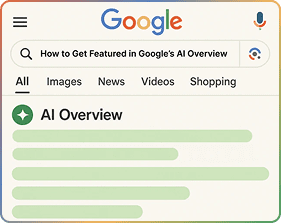
AI search optimization is the practice of making your brand more likely to be cited in AI-generated answers from Google AI Overviews, ChatGPT, Perplexity, Gemini, and similar platforms. Where traditional SEO targets a position in a list of links, AI search optimization targets the answer itself: the cited source in a response a buyer reads before they click anything.
B2B buyers now use AI tools before they talk to sales. If a buyer asks ChatGPT which agencies specialize in AI search and your name doesn’t appear, you’ve lost the conversation before it started.
This article gives you a definition of AI search optimization, an explanation of how AI systems choose what to cite, a comparison with traditional SEO, a seven-step process for optimizing for AI search, a measurement setup you can copy, and a real example from client work.
What is AI search optimization?
AI search optimization helps make your brand more visible in AI-generated answers. It focuses on making your content accessible, relevant, and trustworthy to the platforms people use to find information. You may also see it called generative engine optimization (GEO), answer engine optimization (AEO), or LLM SEO. These are labels for broadly the same work, with different emphases: GEO focuses on getting named and quoted in generative answers, AEO focuses on becoming the direct answer to a question, and LLM SEO focuses on how large language models retrieve and weight content.
Google’s position, stated in its own guide to AI search optimization, is that the same SEO foundations apply. AI systems retrieve and ground their answers in pages that are indexed and eligible to appear in search results. A page that cannot be crawled, indexed, or shown as a snippet is unlikely to appear in an AI-generated answer either.
How AI search engines choose what to cite
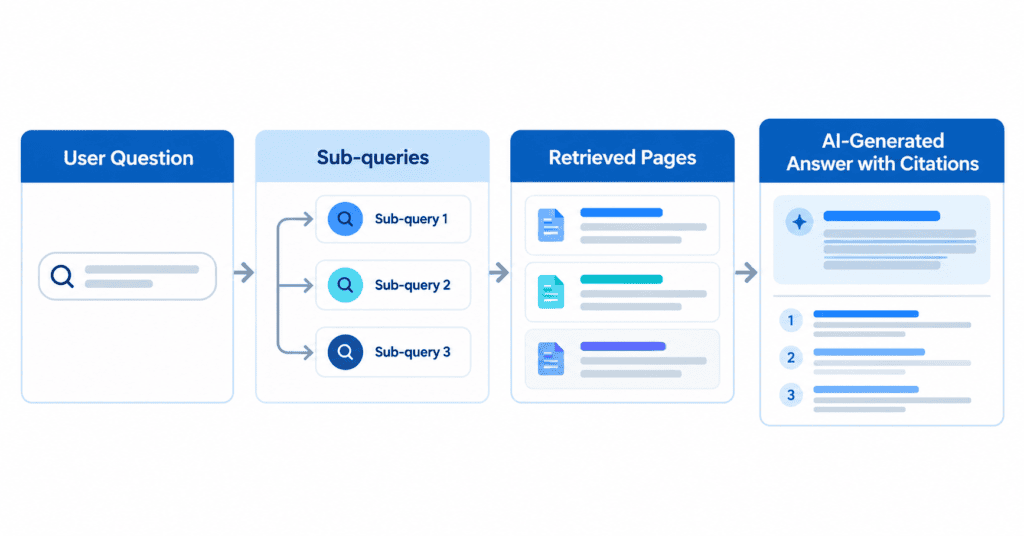
Many AI-powered search experiences use retrieval-augmented generation (RAG) to support their answers with information retrieved from external sources. For example, Google uses its Search infrastructure to retrieve relevant content that can help ground AI-generated responses. However, retrieval and citation methods vary across platforms, and not every AI response follows the same process. Two important concepts for understanding Google’s AI search features are grounding and query fan-out.
Grounding. AI answers draw on pages that are already indexed and eligible to show a snippet in search results, according to Google’s own documentation. A page blocked to crawlers or excluded from indexing cannot be cited, regardless of its content quality.
Query fan-out. When a user asks a question, the AI splits it into several related sub-queries and searches for each one separately (Google’s guide describes this process). A page that answers only the surface question may miss the sub-queries that actually determine which sources get cited. Covering the follow-up questions matters as much as the primary answer.
A page does not always need to rank first in traditional search results to be cited in an AI-generated answer. AI search platforms may reference sources that appear outside the highest organic positions, depending on the question and the information retrieved. This makes relevant, well-supported content valuable alongside traditional SEO fundamentals such as crawlability and authority.
SEO for AI search: what changes and what stays the same
The core requirements of good SEO (crawlability, indexability, relevance, authority and trustworthy content) remain necessary for AI search visibility. Without them, no AI-specific optimization matters.
However, the primary goal changes. Traditional SEO focuses on visibility in ranked search results, while AI search optimization also aims to increase the likelihood of a brand being mentioned or cited in AI-generated answers. That difference changes what you prioritize in your content: answer-first structure, self-contained evidence, question-based headings and consistent brand signals off your own site become more important than keyword density or internal link counts alone.
| Factor | Traditional SEO | AI Search Optimization |
|---|---|---|
| Primary goal | Improve relevant organic search visibility and traffic | Improve brand mentions, source citations, and visibility in AI-powered answers |
| Success metric | Ranking positions, organic clicks, and conversions | Citation share, AI referral traffic, and brand appearances in relevant prompts |
| Content structure | Keyword relevance, topical depth, and internal linking | Answer-first sections, descriptive headings, and well-supported information |
| Authority signals | Relevant backlinks, reputation, expertise, and trustworthy content | Relevant backlinks, credible brand mentions, expert contributions, and verifiable information |
| Technical requirements | Crawlability, indexability, accessible content, and appropriate structured data | SEO foundations plus platform-specific crawler access and content availability checks |
| Replaces SEO? | Not applicable | No. Builds on the same SEO foundation |
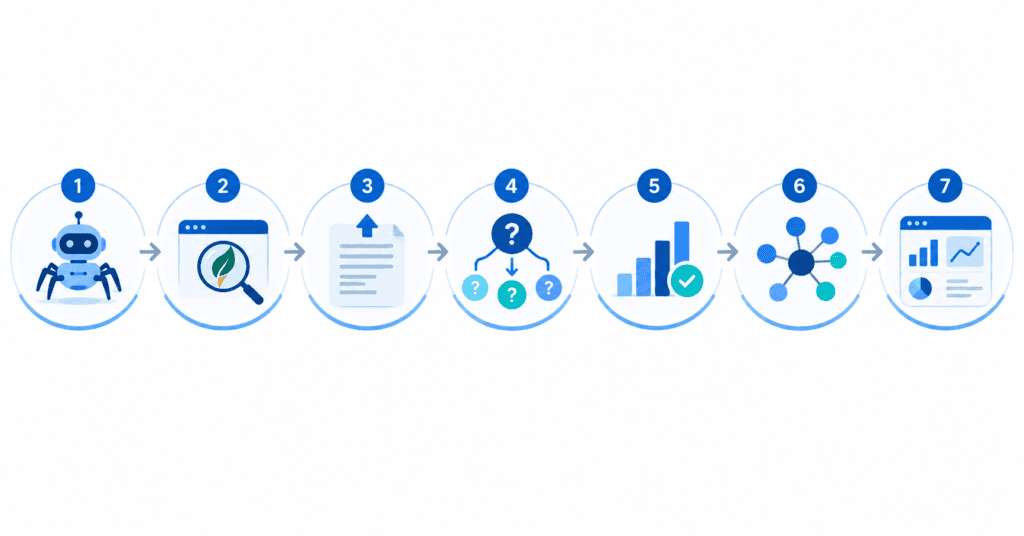
How to optimize for AI search: 7 steps
1. Make sure AI crawlers can reach your pages
AI platforms use different crawlers for search, content retrieval, and model training, so it is important to understand what each crawler does before changing your robots.txt settings. For ChatGPT search visibility, OpenAI recommends allowing OAI-SearchBot. GPTBot, by contrast, is primarily used to collect content for model training. Google AI Overviews and AI Mode rely on Google Search infrastructure, where Googlebot access and search eligibility matter. Google-Extended is a separate control for certain other Google AI uses and does not determine inclusion in Google Search. Review each platform’s official crawler documentation and confirm that your website allows the access needed for your visibility goals.
If JavaScript loads your important content only after the initial page request, some crawlers may struggle to access it. This can affect how those systems retrieve or index the page. Test your key pages in Google’s URL Inspection tool to confirm what the crawler actually sees.
2. See how AI describes your brand today
Before optimizing anything, run 10 to 20 buyer questions through ChatGPT, Perplexity, Gemini, Google AI Overviews, Google AI Mode and Microsoft Copilot. Record which sources are cited, how your brand is described (or whether it appears at all), and which competitors appear in your place.
This is exactly what the free AI Visibility Audit does: it gives you a baseline across platforms before any optimization work starts. Without a baseline, there is no way to know whether changes are working.
CTA: Get a free AI Visibility Audit
3. Optimize content for AI search: answer first
Make important answers easy to find by placing a clear explanation near the beginning of each relevant section. Descriptive headings, direct answers, and supporting evidence help readers understand the content and make individual sections easier to interpret. Answer-first writing is a useful editorial approach, but it does not guarantee that an AI platform will retrieve or cite a particular passage.
Use question-based H2 and H3 headings. Write one clear question, then answer it in the first sentence beneath that heading. This approach covers the secondary keyword “optimize content for AI search” and matches the format AI systems prefer when generating direct answers.
Short paragraphs (two to four sentences) are easier to extract cleanly than dense blocks of text. If a paragraph can stand alone as a cited snippet, it is well-structured.
4. Answer the follow-up questions
Google’s AI search features can use query fan-out to explore related subtopics. Therefore, a page that addresses relevant follow-up questions may offer more comprehensive coverage than one that answers only the original query.
Cover the follow-up questions on the same page through additional H3 sections, and through internal links to related articles that go deeper on specific sub-topics. One important warning: do not publish many thin pages targeting individual fan-out queries. Google describes this approach as scaled content abuse in its own guide, and it is not a viable strategy.
5. Add evidence AI can quote
Original research on generative engine optimization has examined how content changes, including the addition of statistics and credible citations, affect visibility in AI-generated responses. The findings suggest that relevant supporting evidence can improve content visibility under certain experimental conditions. For practical content optimization, prioritize accurate statistics, clearly attributed sources, and original information that genuinely helps readers understand the topic.
Support important claims with reliable sources and accurate data. Identify qualified authors where appropriate, and keep the information up to date. These practices help readers evaluate your content’s credibility.
6. Build mentions off your own site
A brand’s visibility beyond its own website can contribute to how easily customers and search systems discover information about it. Relevant industry publications, trustworthy reviews, partner websites, and credible third-party mentions may help reinforce a brand’s reputation and online presence. Research has also explored associations between branded mentions and AI search visibility, although correlation alone does not prove that increasing mentions will directly increase citations.
Consistent brand facts across every external source matter as much as the mentions themselves. If your company description, services, and credentials are described differently across different platforms, AI systems have less confidence in which version to use.
7. Measure AI search visibility
GA4 can record visits from AI platforms when referral information is available, but those visits may appear within existing channel groupings rather than in a dedicated AI traffic category. To analyze them separately, create an exploration or custom channel group using relevant referral sources, such as chatgpt.com, perplexity.ai, gemini.google.com, copilot.microsoft.com, and claude.ai. Review the setup regularly because referral domains and attribution behavior can change. Some AI-influenced visits may not be identifiable from referral data alone.
Google Search Console now provides dedicated generative AI performance reporting, helping website owners evaluate visibility in Google’s AI search experiences, including AI Overviews and AI Mode. Review the available generative AI data alongside traditional search performance metrics to understand how impressions, clicks, and overall search visibility are changing. These reports cover Google’s search ecosystem rather than citations across every AI platform.
For broader AI citation tracking across platforms not captured in GA4, monitoring tools exist that track citation share and mention patterns.
What you don’t need to do
llms.txt. This proposed file format is intended to make website information easier for language models to access. However, it is not a standard requirement for visibility in Google AI Overviews or AI Mode, and there is no established evidence that adding it consistently improves AI citation performance. Prioritize crawlability, indexable content, and useful information before investing in experimental AI-specific files.
Special schema for AI. Google does not require a separate AI-specific schema type for content to appear in its generative search features. Use supported structured data where it accurately represents visible page content and meets Google’s eligibility guidelines. Standard types such as Article and Organization can provide useful context when appropriate, but structured data does not guarantee AI citations or rich search results.
Rewriting everything for AI or artificial chunking. Google’s own guide states that these approaches are not recommended. Content should be written for readers first. Awkward restructuring to match assumed AI preferences has no documented benefit and typically hurts readability.
A real example from client work
Rafferty Weiss Media partnered with Rise Peak Digital in October 2025 to improve visibility for its video production services. The agency addressed technical SEO issues, improved content structure, and aligned key pages with relevant search intent. According to Rise Peak Digital’s published case study, the client gained 51 new first-page keyword rankings and increased its reported AI citations from zero to 69 within approximately two months.
How long it takes and what it costs
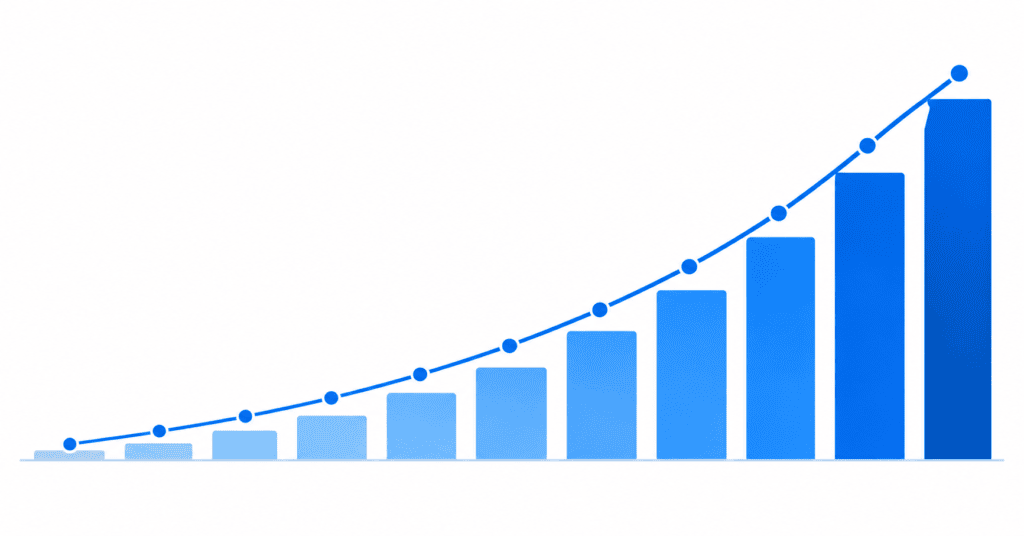
AI search optimization does not produce results in days. The realistic timeline follows two checkpoints that the standing plan uses: a 60-day review and a 90-day review.
A 60-day review can provide an early opportunity to assess whether AI search optimization efforts are beginning to produce measurable changes. Check relevant Google Search Console reports, organic visibility, tracked AI citations, and referral traffic where data is available. Improvements may emerge at different times, and no single metric follows a guaranteed sequence.
At the 90-day review, compare current performance with the original baseline. Examine changes in relevant search visibility, brand appearances in repeated AI prompt tests, AI referral traffic, and conversions where measurable. These indicators can help determine whether the strategy is gaining traction and what needs further improvement. Results vary by website, competition, implementation, and platform behavior.
The pipeline framing matters more than rankings. AI-referred visits and audit bookings are the numbers that connect this work to revenue, not a position number in a tool.
For cost, the right comparison is what you are spending on paid search for the same queries.
Where to start
Three first actions, in order:
- Start with an AI Visibility Audit to establish a baseline for measuring your brand’s visibility.
- Next, review your robots.txt settings to identify potential crawler restrictions. Make sure you understand which crawlers support search visibility before changing access rules.
- Finally, review a high-traffic page and identify opportunities to provide clearer, more direct answers. Use relevant buyer questions to evaluate whether the revised content meets readers’ needs.
Get your free AI Visibility Audit to see where your brand stands across AI search platforms today.
Frequently Asked Questions
What is AI search optimization called?
AI search optimization goes by several names depending on the emphasis: generative engine optimization (GEO) focuses on being named in generative answers, answer engine optimization (AEO) focuses on becoming the direct answer to a question, and LLM SEO focuses on how large language models retrieve and weight content. Google uses the phrase “AI search optimization” in its own documentation. All refer to broadly the same body of work.
Is SEO still worth it in 2026?
Yes. AI systems retrieve and ground their answers in indexed pages. A page that cannot be found by a traditional crawler cannot be cited in an AI-generated answer. Strong SEO fundamentals, including crawlability, indexability, content relevance and off-site authority, remain the prerequisite for AI search visibility, not an alternative to it.
Does AI search optimization replace SEO?
No. AI search optimization builds on SEO rather than replacing it. The difference is the target: SEO targets a ranked position, AI search optimization aims to make your content more likely to earn citations in AI-generated answers. The underlying technical requirements are shared. A brand that neglects SEO will also struggle with AI search visibility.
How do I know if my brand appears in AI answers?
Run 10 to 20 buyer questions through ChatGPT, Perplexity, Gemini, Google AI Overviews, AI Mode and Copilot. Record which sources are cited and whether your brand appears. Repeat the same questions monthly to track changes. Google Search Console’s generative AI report shows impressions from AI Overviews specifically. For systematic tracking across platforms, monitoring tools exist that report citation share over time.
What is the difference between AI search optimization and GEO?
Generative engine optimization (GEO) is the term from the 2024 Princeton and IIT Delhi research paper that measured which content changes raised visibility in AI-generated answers. AI search optimization is a broader term that covers the same work, including GEO and AEO. In practice, the terms are used interchangeably.